Do you sometimes cringe at what students say to each other when they are working together? Honestly, they don’t mean to hurt each other’s feelings or say mean things to each other. Many times, they just do not know how to give constructive feedback. While they know what they want to say, they need to practice expressing their thoughts more appropriately. Thankfully, the strategies below will help students give constructive feedback to their classmates!
People work with each other on different tasks throughout life. While in school, this may be on projects, activities, and extracurriculars. Then, it progresses to various aspects based on the profession. Whether agreeing on a design concept or lesson idea, adults work together all the time to gain different perspectives. Thus, constructive feedback is a vital part of developing respectful partnerships. This means learning to give and receive constructive feedback at a young age is essential! While practicing in the classroom, students have the support of their class and teacher. Luckily, this means they will improve on giving constructive feedback as they continue to work with each other.
Thankfully, there are multiple ways for students to practice giving constructive feedback. This means they will learn different techniques to apply in various situations! In many ways, providing constructive feedback is the same as learning new content. Students need practice and patience as they formulate what they want to say and how they should say it.
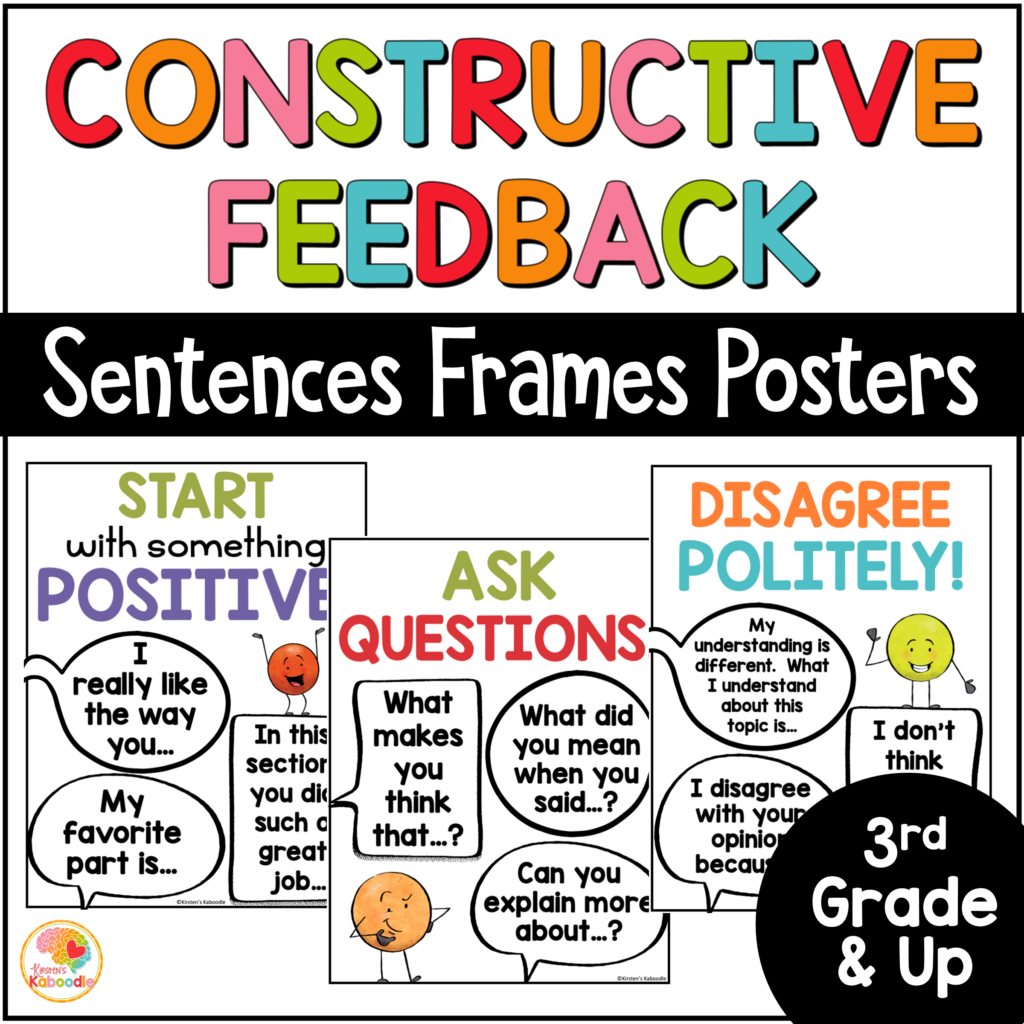
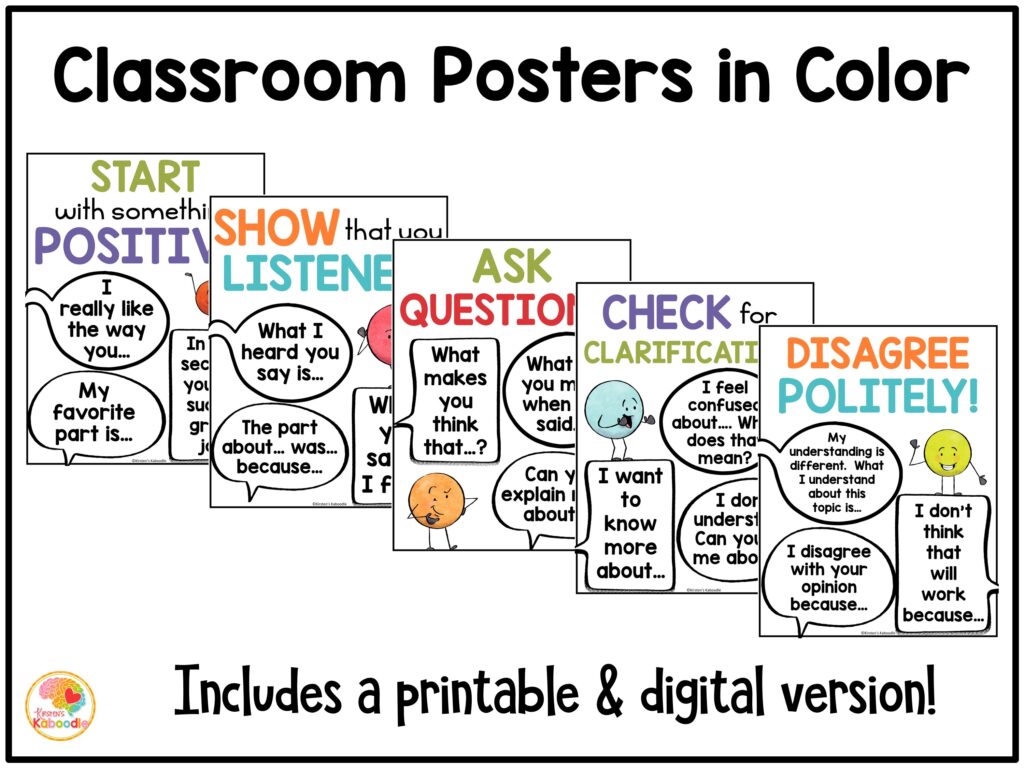
One of the best ways to begin giving constructive feedback is to start with something positive. Thus, explain to students how they can start by saying something they liked or that stands out to them. Honestly, a great way to open up a conversation is with positivity.
For someone to value another’s opinion, they want to know the person listened. Hence, remind students to provide specific details and aspects when giving feedback. Their comments should show they truly listened to the other person speaking and sharing.
Disagreements often occur because people are afraid to ask questions. This usually happens when giving constructive feedback. Therefore, it will be essential to let students know that asking questions is an effective way to foster dialogue when discussing ideas.
When sharing, it is common to forget something important or to overexplain due to nerves. Hence, an excellent technique for giving constructive feedback is to ask for clarification. It may be over the topic in general or a specific aspect. Either way, checking for clarification is an effective way to ensure there is no confusion. It often allows the person sharing to further expand on thoughts they forgot to say.
Students will not always agree with each other. That’s okay! However, they do need to practice disagreeing politely. If they don’t, feelings will end up hurt.
This strategy is vital for both giving and receiving constructive feedback. A good partnership involves conversation. Thus, students can use sentence starters to help explain their thoughts. Honestly, this strategy is a great way to get students talking!
A crucial part of giving constructive feedback involves making suggestions for improvement. Hence, students can help each other make their work even stronger! Honestly, students can provide valuable insights into other viewpoints on the topic. While the person may not adopt the suggestions, the conversation allows them to hear other perspectives. Something as simple as a different color scheme can greatly improve how something looks.
No one likes to leave a meeting feeling hurt or upset. Thus, it is imperative to end the conversation on a positive note. Therefore, remind students to share something they enjoyed about the piece they are evaluating when giving constructive feedback.
Students often need practice and assistance when understanding how to give constructive feedback. Thankfully, all of the strategies above have helpful posters! This resource has one poster per strategy with sentence starters and tips for students. Luckily, this means they can reference the posters when giving constructive feedback!
Students must learn to work successfully with others. Honestly, this skill is hard to learn but vital to so many aspects of life. Thankfully, giving constructive feedback is an incredible way to help students communicate with others while being honest with their thoughts.
If you do not want to miss any upcoming lessons, join my email list to be notified of all interactive lessons!