“Two wrongs don’t make a right” is a phrase that children may often hear. However, children may not actually know what this means! Upon hearing it, they may be confused and puzzled about what the person is actually telling them. This is often how children feel when learning a figurative language. Ultimately, it is challenging to pull out the deeper meaning that figurative language requires of students! This is absolutely the case as students learn about proverbs and adages. First, proverbs and adages are complicated words to say! Second, it can be incredibly stressful to understand the meaning behind these concepts. Thus, it is important to create engaging lessons to help students learn complex material in a fun way!

Adages are short, memorable sayings considered true by most people. Typically, they are wise sayings that may be short but are very philosophical. Thus, adages can be viewed as lessons learned from what many people experience in life. In other words, adages help give wisdom.
Examples include:
When learning about proverbs and adages, it is important that students know a proverb may be an adage. They are both short, well-known sayings. However, the purpose of proverbs is to offer advice and prompt people to reflect on their decisions. On the other hand, adages convey wisdom, as they are statements that most people consider true. Therefore, a proverb may also be considered an adage if the saying contains practical wisdom about life.

When learning new material, students deserve engaging, interactive lessons. When they are truly engaged in the lesson, they comprehend the content more deeply. Because it can be hard to interpret the meaning of adages and proverbs when first learning them, engagement is key! Therefore, these great lesson ideas will help students understand the content without becoming overwhelmed.
Oftentimes, students hear adages from their grandparents. For instance, “time flies when you’re having fun” is a common example. Students will be given a list of popular ones. If there is time, have students ask their parents and grandparents to help put the list together! Then, each student picks a different one and creates a poster. The selected adage will be on it, while the picture explains what it actually means. Therefore, students will see that time does not actually fly. Instead, it means the day goes fast when everyone is having fun. This activity will create incredible classroom art to fill the walls!
Sorting is a great way to practice teamwork! Students will be given cards that have adages on them. Be sure to include both well-known and lesser-known ones to really challenge students. Then, provide a few minutes for a small group to discuss what they think the adages mean. Next, provide cards that have specific meanings. Finally, give groups time to try to match the adage to its meaning.

One of the best ways to learn new content is to explain it in your own words. Therefore, students will use a list to create a short story by selecting a specific number of items from it. This is also an easy activity to differentiate! For example, some students may need to include 4 adages, while others may need to include 2. Be sure to remind students that readers should understand the adage’s real meaning in the context of the story. Students will be so excited to share their stories with the class. Additionally, the class can pick out the adages and explain their meanings based on the story!
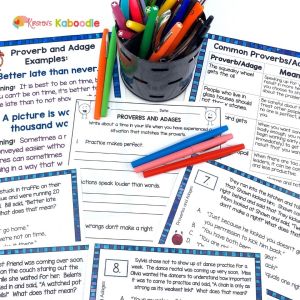
While some students will pick up on this content with no problem, other students may struggle. This is because some students struggle to learn figurative language due to difficulty interpreting its meaning. If this is the case, additional practice is a great way to help students! It can give them more time to read examples and discuss their meaning. Thankfully, Proverbs and Adages Activities and Task Cards are a great tool to use! Here, there are 24 task cards and 7 pages of common proverbs and adages. There are even 3 additional activity sheets for even more practice!
I have also created a super fun and engaging Proverbs and Adages Pixel Art Coloring Activity that is great for reviewing proverbs and adages. There are three options for completing this activity in each file (a digital pixel art version, a printable color-by-number version, and a “quick answer sheet” that doesn’t require coloring). Students can fill out the answer sheet for a grade and complete the coloring sheet as an early finisher, soft start, or brain break during the day. Check them out here!
While proverbs and adages are tough terms, they can create some of the most enjoyable lessons! The content offers many ways for students to work with classmates while giggling and sharing different ideas. Truly, students will go home and tell their parents about adages after these amazing lessons!
If you do not want to miss any upcoming lessons, join my email list to be notified of all interactive lessons! By joining the email list, you will also receive FREE Figurative Language Bell Ringers for blog exclusive subscribers!


